

The Space Race

🌕 1. Humans Are Going Back to the Moon… Why?
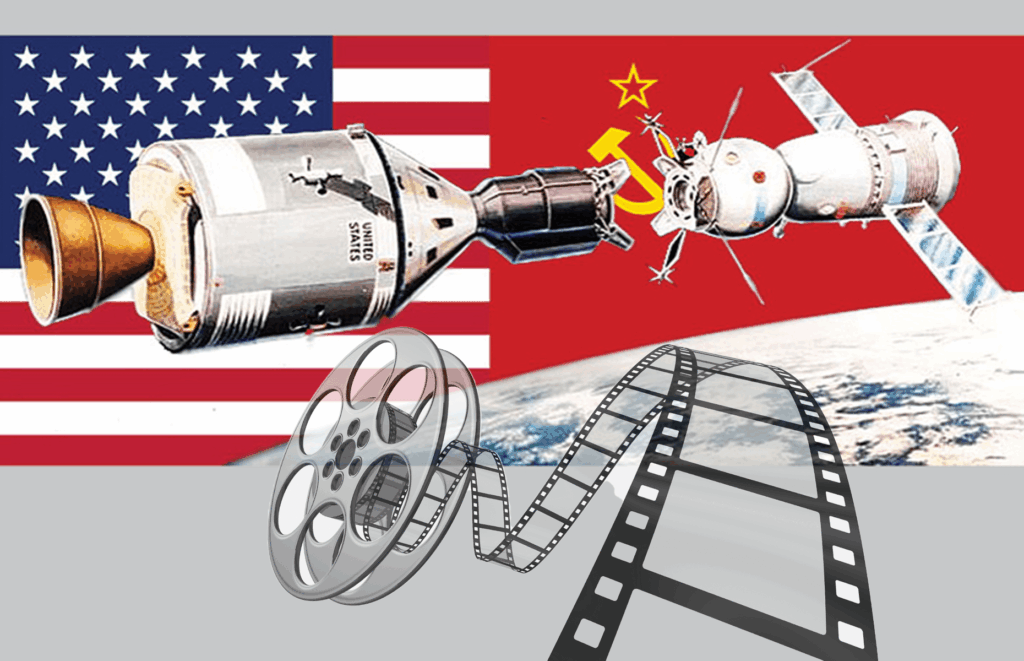
In the next months, humans are preparing to return to the Moon. After more than 50 years, new missions are being organized to land astronauts there again. Countries like the United States, China, and others are investing billions of dollars in space programs. But this is not the first time that the Moon became a symbol of power and competition.
In the 1960s, going to the Moon was not only about science. It was about politics, pride, and power. During a period called the Cold War, two superpowers — the United States and the Soviet Union — competed to show the world which system was stronger. Space became the stage for this competition.
Why do you think countries still want to go to the Moon today? Do you believe it is only about science? Or is it also about power and influence?
💬 Reflection
- Why do you think the Moon is still important today?
- Do you believe space exploration brings more benefits or more risks?
❄️ 2. What Was the Cold War?
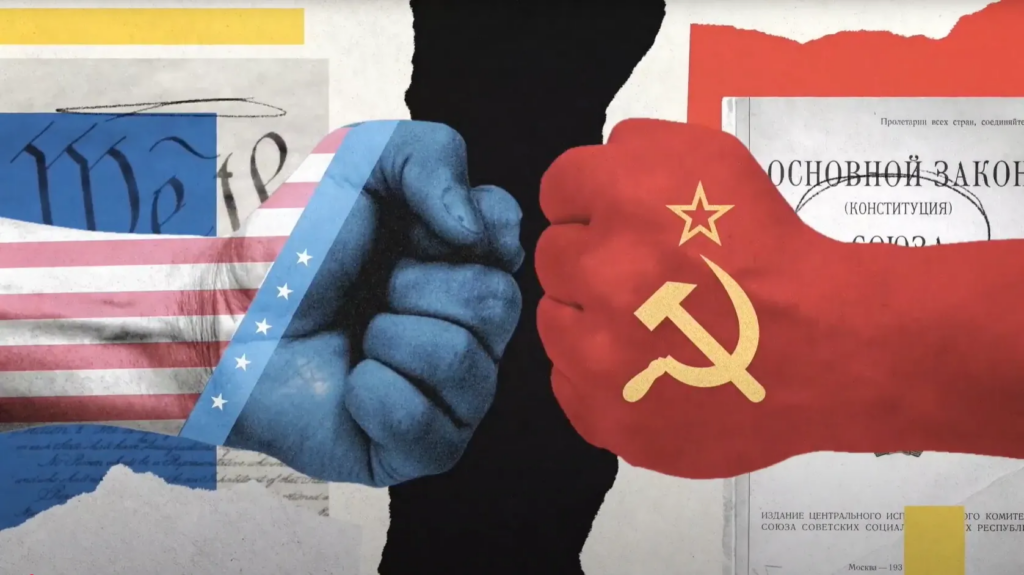
The Cold War was not a traditional war with soldiers fighting on battlefields between the two main countries. It was called “cold” because the United States and the Soviet Union did not directly fight each other in a large military conflict. Instead, they competed in politics, technology, weapons, and influence around the world.
After World War II, the world was divided into two main systems. The United States defended capitalism and democracy. The Soviet Union defended communism and a centralized government. Both countries wanted to expand their influence and prove that their system was better.
Even without direct combat between them, the tension was real. There were nuclear weapons, secret missions, spies, propaganda, and smaller conflicts in other countries. So yes — it is possible to fight a war without direct battles. It becomes a war of influence, intelligence, technology, and fear.
💬 Reflection
- Can a “cold” war be as dangerous as a “hot” war?
- Do you think competition between countries can sometimes create progress?
🚀 3. Phase One: The Soviet Union Takes the Lead
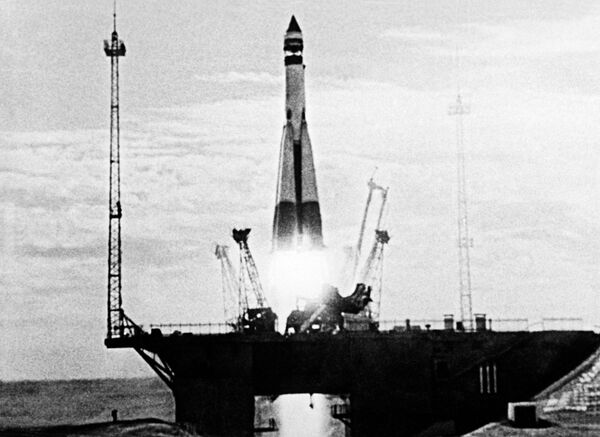
In 1957, the Soviet Union surprised the world. They launched Sputnik 1, the first artificial satellite in history.
Sputnik was small — about the size of a beach ball — but its impact was enormous. It sent simple radio signals back to Earth. When people around the world heard that signal, they understood something important: the Soviet Union had rockets powerful enough to send objects into space. And if they could send satellites, they could also send missiles.
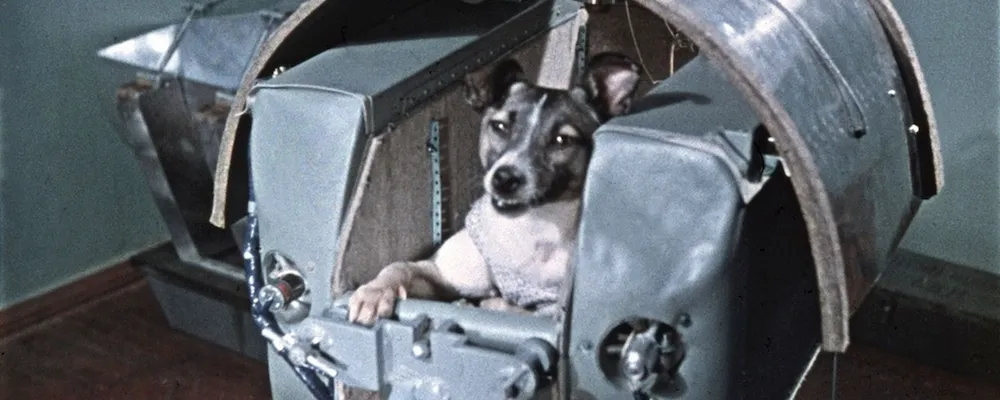
Just one month later, the Soviets launched Sputnik 2, carrying Laika, the first living being to orbit Earth.
Laika was a small dog found on the streets of Moscow. She did not survive the mission, but her flight showed that living beings could survive launch and orbit, at least for a short time. It was a huge scientific step — but also a controversial one.
The world saw clearly: the Soviet Union was winning the first stage of the Space Race.
💬 Reflection
- How do you think people felt when Sputnik was launched?
- Was it ethical to send Laika to space knowing she would not return?

👨🚀 4. The First Human in Space
In 1961, the Soviet Union made history again. Yuri Gagarin became the first human to travel into space aboard Vostok 1.
Gagarin orbited the Earth one time and returned safely. His flight lasted only 108 minutes, but it changed history. He became a global hero. Once again, the Soviet Union proved its technological strength.
The United States felt pressure. If the Soviets were first in space, what would they do next? This moment pushed the Americans to accelerate their own program.
💬 Reflection
- Why do you think being “first” was so important?
- Do you think symbolic victories matter in politics?

🇺🇸 5. The United States Responds
After Gagarin’s flight, U.S. President John F. Kennedy made a bold promise: America would send a man to the Moon before the end of the decade.
This goal created the NASA Apollo Program. Thousands of scientists, engineers, and workers joined the mission. It was expensive and risky, but it became a national priority.
Finally, in 1969, Neil Armstrong stepped onto the Moon during the Apollo 11 mission.
His famous words — “That’s one small step for man…” — became part of history. The United States had achieved what many thought was impossible.
In the end, the Soviet Union won the early stages. But the United States won the symbolic final goal: landing humans on the Moon.
💬 Reflection
- Why was the Moon landing considered a victory?
- Do you think this competition helped humanity?
🛰️ 6. What Was Launched During the Space Race? (Chronological Summary)
Here is a simplified timeline:
- 1957 – Sputnik 1 (first satellite)
- 1957 – Sputnik 2 (Laika, first animal in orbit)
- 1961 – Vostok 1 (first human in space – Yuri Gagarin)
- 1969 – Apollo 11 (first humans on the Moon)
Each launch represented more than science. It represented national pride and political power.
Today, space missions are more cooperative. Countries work together on projects like the International Space Station. But competition still exists — now with new players like China and private companies.
💬 Final Reflection
- Can competition create innovation?
- Do you think humans will live on the Moon one day?
- If you were an astronaut, would you accept the risk?
- Was the Space Race more about science or about power?
I think that the first human in the space and the first human in the moon was the most interesting things that happened, because in my opinion these things are the most interesting that happened.
I think that the most impressive event was the first human in the space and the first human in the moon. I say this because these events changed science, and these events were so important for many people around the world. In my opinion, this war didn’t make a lot of sense, but it was so important because it changed the reality. We have computers, technologies because of these historic events.
In my opinion, Sputnik was actually the most impressive thing that happened in the space race. What I mean by that is that with the Sputnik project humanity was able to unravel all the necessary equations to escape orbit of the planet. Therefore, every other major achievement was just a derivation of that initial discovery.
To write a portrait of the Space Race it is really important to start talking about the Cold War first. It was a conflict between the 2 main powers of the world after World War II, Soviets and Americans. They fought for influence through science and technology, so space achievements were really important for their competition.
Now that I already contextualized the reason of Space Race, I will talk about my opinion when it comes to its impacts. This competition created a lot of inovation, but it put the life of many living beings at risk. We can’t forget the amount of deaths that happened to achieve their objectives. I can’t imagine accepting to put my life at risk just because of national pride.
At the end, we can affirm that it was a period when science was used as a way to conquer power and influence around the world.
The best thing about the space race, in my opinion, was the Sputnik 1, because it was the first satellite launched in the space. I say this because it was a big step for science. As a consequence of Sputnik, humans discovered how to escape the gravity of the planet. All the other discoveries were the consequence of this project like the first man in the space, Apollo 11 and many other things.
In my opinion, the Cold War was a very important period for scientific development because this political and ideological war between the US and USSR created a necessity of proving superiority in different areas by any means necessary, like in the space field. The USSR won the first stages of this race by sending the first sattelite, animal and human to the space, but the US won the final trophy due to the Apollo mission, which was capable of, with a lot of risks and studies, sending the humanity to the moon. In the end of the day, this war allowed the development of a lot of important technologies that we use today.